
What Is Asynchronous Communication? The New Wave of Remote Work
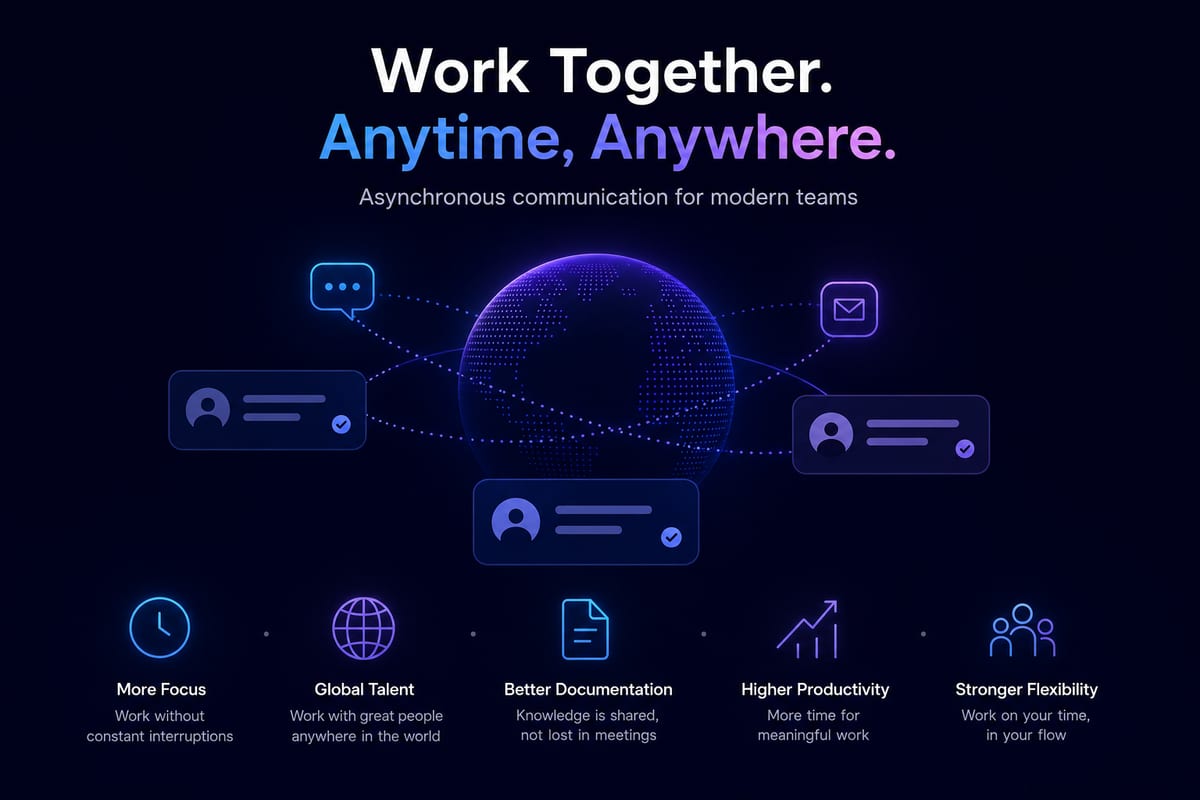
Remote work has transformed how companies operate. The next evolution is asynchronous communication—a way of working that prioritizes outcomes, flexibility, and deep focus over constant meetings and rigid schedules.
Whether you're searching for remote async jobs or building a distributed team, understanding asynchronous communication is becoming essential. More companies are replacing back-to-back meetings with written updates, documentation, and flexible workflows that allow employees to contribute from anywhere in the world.
As organizations continue hiring globally, asynchronous communication is quickly becoming a competitive advantage for both employees and employers.
What Is Asynchronous Communication?
Asynchronous communication is any form of communication that does not require an immediate response.
Instead of expecting coworkers to reply instantly, information is shared through emails, project management tools, recorded videos, documentation, and messaging platforms. Team members can review and respond when it fits their schedule and workload.
Common examples of asynchronous communication include:
- Slack messages
- Microsoft Teams messages
- Recorded video updates
- Project management comments
- Internal wikis and documentation
- GitHub pull requests and code reviews
The goal of asynchronous communication is simple: allow people to communicate effectively without constantly interrupting one another's work.
What Is Asynchronous Work?
Asynchronous work is the practice of building company processes around asynchronous communication.
In an async-first company, employees are trusted to manage their schedules and are evaluated based on results rather than hours spent online. Communication is documented, meetings are minimized, and deep work is protected.
Rather than spending hours every week in status meetings, team members collaborate through written updates, shared documents, and project management systems.
This approach allows companies to hire talent across multiple time zones while giving employees greater flexibility and autonomy.
Synchronous vs Asynchronous Communication
Understanding synchronous vs asynchronous communication is critical for remote teams.
Synchronous Communication
Synchronous communication happens in real time and requires all participants to be present simultaneously.
Examples include:
- Video meetings
- Phone calls
- Live chat conversations
- In-person meetings
- Zoom calls
Benefits:
- Faster decision-making
- Immediate clarification
- Stronger personal connection
- Effective during emergencies
Drawbacks:
- Interrupts focus
- Creates scheduling challenges
- Often results in excessive meetings
- Difficult for distributed teams across multiple time zones
Asynchronous Communication
Asynchronous communication allows people to respond when it fits their schedule.
Examples include:
- Slack messages
- Recorded videos
- Documentation
- Task management systems
Benefits:
- More deep work and focus time
- Better work-life balance
- Easier collaboration across time zones
- Improved documentation and transparency
- Fewer interruptions
Drawbacks:
- Slower feedback loops
- Requires stronger written communication skills
- Can delay urgent decisions
Synchronous vs Asynchronous Communication: Quick Comparison
| Synchronous Communication | Asynchronous Communication |
|---|---|
| Requires immediate response | Response can happen later |
| Meetings and phone calls | Email, documentation, messaging |
| Faster for urgent decisions | Better for focused work |
| Difficult across time zones | Ideal for distributed teams |
| Creates more interruptions | Minimizes interruptions |
| Less documentation by default | Naturally creates documentation |
The most successful remote companies don't eliminate synchronous communication entirely. Instead, they use asynchronous communication by default and reserve meetings for situations where real-time discussion provides clear value.
Why Asynchronous Communication Matters for Job Seekers
The rise of asynchronous communication has created new opportunities for professionals around the world.
Access to More Remote Opportunities
Many of today's fastest-growing companies operate asynchronously and hire globally. Learning how to work effectively in async environments can significantly expand your career options.
Greater Flexibility
Async-first companies often allow employees to structure their workdays around when they are most productive rather than adhering to a strict 9-to-5 schedule.
Better Work-Life Balance
Without constant meetings and interruptions, employees can spend more time on meaningful work while maintaining healthier boundaries between work and personal life. This means people are free to go for a walk during the middle of the day to clear their minds or pick up their kids from school.
Valuable Career Skills
Companies hiring for remote async jobs often prioritize candidates who demonstrate:
- Strong written communication
- Time management
- Self-direction
- Autonomy
- Accountability
- Documentation skills
- Independent problem-solving
Developing these skills can make you a more attractive candidate in today's remote-first job market.
Benefits of Asynchronous Communication
Asynchronous communication benefits both employees and employers by reducing interruptions and creating more efficient ways of working.
Deep Work and Focus
One of the biggest advantages of asynchronous communication is the ability to work without constant interruptions. Employees can dedicate uninterrupted blocks of time to solving complex problems, writing code, designing products, or creating content.
Access to Global Talent
Hiring managers are no longer limited by geography. Async-first companies can recruit talented professionals regardless of location, giving them access to a much larger talent pool.
Better Collaboration Across Time Zones
Async communication makes it possible for teams in different countries and continents to work together efficiently without requiring everyone to be online simultaneously.
Reduced Meeting Fatigue
Many routine updates and discussions can be handled asynchronously, allowing employees to spend less time in meetings and more time on meaningful work.
Improved Documentation
Written communication naturally creates records of decisions, processes, and discussions. This improves transparency, reduces information silos, and helps new employees get up to speed faster.
Greater Autonomy & Work-Life Balance
Employees gain more control over how they structure their workday, often leading to higher job satisfaction, improved performance, and a better work-life balance. With this flexibility, employees are able to exercise or pick up their kids from school during the day.
Challenges of Asynchronous Communication
While asynchronous communication offers significant benefits, it also comes with challenges.
Delayed Responses
Not every question receives an immediate answer. Teams must establish clear expectations around response times and escalation procedures for urgent issues.
Requires Strong Communication Skills
Poorly written messages can create confusion and misalignment. Successful async teams invest heavily in communication training and documentation.
Cultural Adjustment
Organizations transitioning from traditional office environments often need time to adapt to new communication habits and workflows.
Maintaining Human Connection
Without regular face-to-face interaction, companies must intentionally create opportunities for relationship-building, collaboration, and team bonding.
Asynchronous Communication Through the Lens of Software Engineering
Software developers often understand asynchronous communication intuitively because modern applications rely heavily on asynchronous processes.
Programming languages such as JavaScript, TypeScript, Python, Rust, C#, Go, Kotlin, and Swift all support asynchronous execution.
In modern web applications, the vast majority of I/O operations—including API requests, database queries, file system access, and network communication—are executed asynchronously. In environments such as web browsers and Node.js, nearly 100% of network requests are handled asynchronously to prevent applications from freezing while waiting for responses.
This allows applications to continue processing user interactions and other tasks while data is being fetched in the background.
The workplace equivalent is similar.
Instead of requiring everyone to stop what they're doing and join a meeting, asynchronous communication allows work to continue while teammates review and respond when available.
Just as asynchronous code improves performance by preventing bottlenecks, asynchronous communication helps teams stay productive by reducing interruptions and preserving focus time.
The result is greater efficiency, fewer meetings, and better use of everyone's time.
When Synchronous Communication Is Still Necessary
Even highly asynchronous companies recognize that some conversations are best handled in real time.
Urgent Issues and Incidents
Critical situations often require immediate collaboration and decision-making.
Sensitive Conversations
Performance reviews, conflict resolution, and personal discussions are usually better conducted through live conversation.
Team Building
Occasional virtual gatherings help strengthen relationships and maintain company culture.
Project Kickoffs
Starting major initiatives together ensures alignment and establishes momentum.
How to Build an Asynchronous Work Culture
Organizations looking to embrace asynchronous communication should start with clear guidelines.
Define Response Expectations
Establish expectations for communication channels. For example:
- Slack messages: within 24 hours
- Email: within 48–72 hours
- Urgent issues: phone call or designated escalation channel
Make Writing the Default
Important decisions should be documented rather than discussed exclusively in meetings.
Use Async-Friendly Tools
Popular tools include:
- Slack
- Twist
- Notion
- GitHub
- Linear
- Loom
- Geekbot
These platforms make it easier for distributed teams to communicate without relying on real-time meetings.
Protect Deep Work
Encourage employees to block focus time on their calendars and disable notifications during important work sessions.
Reserve Meetings for High-Value Conversations
Meetings should be intentional and used only when real-time collaboration creates meaningful value.
Remote Async Jobs: Companies Leading the Way
Many successful companies have built their operations around asynchronous communication.
- GitLab: Often considered the gold standard of async work, GitLab operates with thousands of employees across dozens of countries and maintains one of the world's most comprehensive public handbooks.
- Deel: Deel's globally distributed workforce relies heavily on documentation and asynchronous workflows to support customers across time zones.
- Supabase: The open-source Firebase alternative coordinates work through GitHub, documentation, and written proposals rather than constant meetings.
- DuckDuckGo: The privacy-focused search company has long embraced remote work and written-first communication.
- Docker: Docker uses asynchronous communication, written specifications, and recorded demos to support collaboration across a globally distributed team.
Frequently Asked Questions
Is asynchronous communication the same as remote work?
No. A company can be fully remote while still relying heavily on meetings and real-time communication. Asynchronous communication is a specific approach to how teams collaborate.
What skills do async-first companies look for?
Most async-first companies value:
- Written communication
- Time management
- Self-motivation
- Accountability
- Documentation habits
- Independent problem-solving
Are async-first companies more productive?
Many organizations report improved focus, fewer interruptions, and reduced meeting fatigue when asynchronous communication is implemented effectively.
Where can I find remote async jobs?
WorkingAsync.io specializes in remote opportunities at companies that embrace asynchronous communication and async-first work cultures.
The Future of Work Is Asynchronous
As companies continue embracing remote and distributed work, asynchronous communication is becoming one of the most important workplace skills. Employee demand for remote work remains incredibly strong—98% of workers say they want to work remotely at least some of the time, highlighting just how important flexibility has become in the modern workplace.
For job seekers, asynchronous communication opens the door to more flexible careers, global opportunities, and better work-life balance. For hiring managers, it provides access to a broader talent pool, increased productivity, and more scalable processes.
As remote work continues to reshape how organizations operate, the companies that thrive will be those that learn how to balance synchronous and asynchronous communication effectively. Teams that prioritize documentation, reduce unnecessary meetings, and embrace async-first workflows will be better positioned to attract top talent and collaborate across time zones.
If you're ready to join the future of work, explore the latest remote async jobs and discover companies building async-first cultures at WorkingAsync.io.
We are the premier place for finding jobs worldwide at async-first companies.